University of Leeds 2025
Radiography, Village Healthcare Experiences, Nepal Kathmandu
4.jpeg) I was really keen to experience radiography and healthcare in a developing country, and to test my skills in unfamiliar environments. I also wanted to make the most of my assigned elective weeks, and there was even a grant I could apply for through my university.
I was really keen to experience radiography and healthcare in a developing country, and to test my skills in unfamiliar environments. I also wanted to make the most of my assigned elective weeks, and there was even a grant I could apply for through my university.
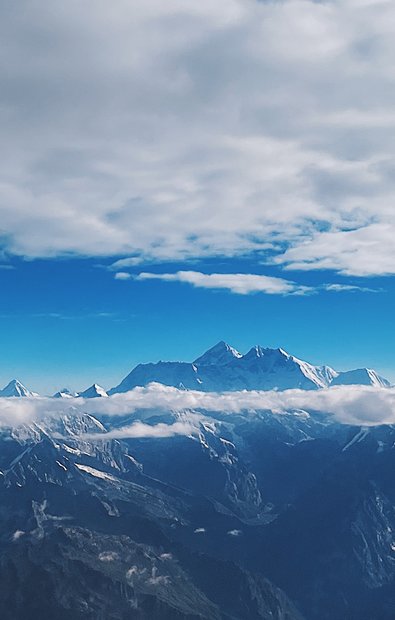
My main placement hospital in Kathmandu was bustling and lively with a massive daily patient turnover. The hospital itself was great, with lots to learn, and the view from the cafeteria was stunning! Although initially there didn't appear to be the order and organisation of appointments and queues I was used to in the NHS, the hospital's efficiency was actually impressive, with hundreds of patients seen in the radiology department every day. Each X-Ray room had about 100 patients per day, and the pace of imaging was rapid, which made up for the time lost during power cuts when the equipment went down!
11.jpeg) One thing that I found hard during my placement was the cost of imaging, which was unaffordable for many patients - this meant turning people away without imaging, which would have allowed treatment of mostly treatable or curable diseases. There was a system for some patients — such as cancer patients — to get government funding, but this didn't seem organised or frequent from what I saw.
One thing that I found hard during my placement was the cost of imaging, which was unaffordable for many patients - this meant turning people away without imaging, which would have allowed treatment of mostly treatable or curable diseases. There was a system for some patients — such as cancer patients — to get government funding, but this didn't seem organised or frequent from what I saw.
I picked up how to become more time-efficient and became much more confident in positioning patients quickly and firmly, as local staff really didn't let anything stop them! Also, the students in Kathmandu took the lead in the departments and only called their supervisors when they encountered an issue — this approach made them much more competent. I felt we could learn from this in the NHS, with supervisors stepping back and letting students lead examinations. Local students also led talks every afternoon, which I thought was great and encouraged peer-to-peer learning.
6.jpeg) During the Village Healthcare Week, I learnt many new skills because there was a lack of imaging equipment (the sonographer was only there once per month). I learnt how to do dressings and remove stitches, complete Doppler scans on pregnant patients, and manually check blood pressures with stethoscopes. I really recommend the Village Healthcare Week for a realistic insight into village life and how healthcare is delivered. The week was great at getting us out of our comfort zone and appreciating the tough lifestyle. Laxmi was great as a host too, and we learnt lots about cooking, cultural practices, and household dynamics.
During the Village Healthcare Week, I learnt many new skills because there was a lack of imaging equipment (the sonographer was only there once per month). I learnt how to do dressings and remove stitches, complete Doppler scans on pregnant patients, and manually check blood pressures with stethoscopes. I really recommend the Village Healthcare Week for a realistic insight into village life and how healthcare is delivered. The week was great at getting us out of our comfort zone and appreciating the tough lifestyle. Laxmi was great as a host too, and we learnt lots about cooking, cultural practices, and household dynamics.
19.jpeg) There were many motorbike accidents that led to extreme fractures and injuries. One was so severe that the patient's pelvic ring completely opened and twisted laterally. Even after seeing these injuries, the staff still did not step in to help move the patient. Instead, the family moved the patient without even a patient slide or any other equipment. It was hard to watch and not intervene! Another case in interventional was a patient with such late disease that there were stones throughout the whole kidney, which made the nephrostomy very tricky.
There were many motorbike accidents that led to extreme fractures and injuries. One was so severe that the patient's pelvic ring completely opened and twisted laterally. Even after seeing these injuries, the staff still did not step in to help move the patient. Instead, the family moved the patient without even a patient slide or any other equipment. It was hard to watch and not intervene! Another case in interventional was a patient with such late disease that there were stones throughout the whole kidney, which made the nephrostomy very tricky.
There was also a young girl undergoing a CT scan when a complete power cut occurred without a backup generator, so everything went pitch-black midway through the scan. In the UK, this would have been a panic and a radiation incident, but everyone was so calm and in no rush to go and get her. It just showed how practices were different, and anything can be normal when you get used to it!
I learnt a lot about resilience in tough working environments from Nepal - the staff and students work 6-day work weeks, and the pace in the departments was relentless. All the staff really made the best of the equipment they had, despite the heat and power cuts. Alongside this, the village work was brutal, with very early wake-ups to pray, followed by long days in the fields and evenings full of housework. It really made me appreciate the work safety standards we have at home, and although we have long shifts, there are always breaks and support from other services.
 I tried to visit a temple or other attraction every day after placement - some highlights were the Monkey Temple, the Kathmandu Durbar square, where we saw the Kumari (living princess) and the Boudha Stupa. I also loved exploring Thamel with the other students, as it was such a vibrant and lively place. On our free weekend, we went to Chitwan after placement on Friday and stayed until Sunday. We stayed at a lovely hotel where the local tribe performed a dance for us. The tribe was known for claiming they had malaria resistance (due to their alcohol and spice-heavy diet!) We went on boat and jeep safaris, where we saw rhinos, crocodiles, a sloth bear, deer, and lots of other wildlife. It was great!
In the Work the World house, we had language lessons, BBQ nights once a week, and a really interesting talk by a local ED doctor on the challenges of healthcare in Nepal. There was always something going on!
17.jpeg) I felt really supported by the Work the World team, who recommended activities and gave us tips on booking our weekend trips. The experience was made even better by having other healthcare students in the house to explore Nepal with and by the staff who were so friendly and cooked amazing food.
I felt really supported by the Work the World team, who recommended activities and gave us tips on booking our weekend trips. The experience was made even better by having other healthcare students in the house to explore Nepal with and by the staff who were so friendly and cooked amazing food.
I would really recommend an overseas healthcare placement in Nepal — I had an amazing time and feel so fortunate to have had an experience that not many people can say they've had. I was worried about the finances, but I'm so glad I went ahead with the trip and added the Village Healthcare Week. I really will remember it forever.
Start Your Journey
Want to go on your own once-in-a-lifetime adventure? Get started below:
Want to go on your own once-in-a-lifetime adventure? Get started below:


%20Thumbnail.png)