- Cardiff University 2026
- Tandarts, Sri Lanka Kandy
Different healthcare systems operate under varying pressures, which shape the delivery of care. Observing these differences first hand allows for a more nuanced understanding of how dentistry is practised beyond the UK.
I believe this placement provided an opportunity to appreciate dentistry from a broader, global perspective.
For example, in Sri Lanka, reduced access to routine dental services contributed to a higher demand for emergency care compared to my experience at Cardiff University. As a result, clinicians demonstrated a high level of efficiency and clinical skill, often providing effective treatment within limited appointment times. This highlighted the importance of adaptability and prioritisation in resource-constrained settings. Experiencing this environment enabled me to appreciate how different systems influence clinical decision-making and patient care, while encouraging reflection on my own training and assumptions about ‘standard’ dental practice.
On my first day, the administrative team facilitated a smooth and well-organised introduction to the hospital, guiding us through the various dental departments and ensuring we felt integrated from the outset.
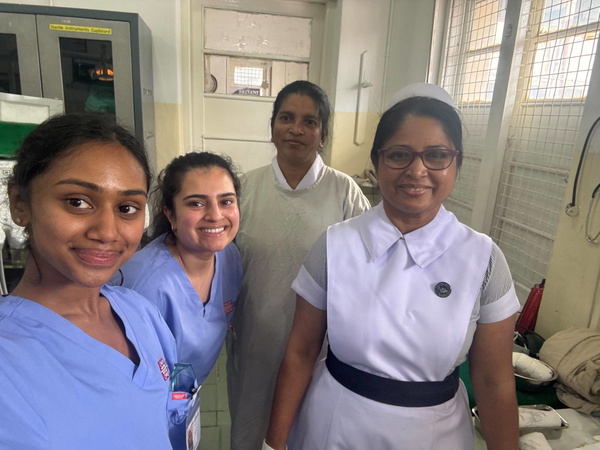
What immediately stood out to me was the scale and significance of the hospital within Sri Lanka’s public health system. As the second largest hospital in the country, providing tertiary care across multiple specialties, it plays a critical role not only for the local population in Kandy but also for patients travelling from neighbouring districts.
I was particularly struck by the wide catchment area, with patients attending from seven of Sri Lanka’s nine districts, highlighting both the hospital’s importance and the demand placed upon its services.
During my dental placement, I developed both my clinical skills and understanding of delivering dental care within a different healthcare setting. My time in the Dental OPD enhanced my confidence in oral surgery. Due to the fast-paced nature of the emergency service, clinicians demonstrated efficiency and precision when carrying out extractions. Observing this highlighted the importance of adapting treatment to patient demand while maintaining effective technique and reassurance. This improved my own confidence, speed, and dexterity, while showing how clinicians adapt in high-demand environments.
One of the most memorable cases I observed was within the Oral and Maxillofacial Surgery (OMFS) department involving a patient with a recurrent ameloblastoma. The patient had previously undergone excision of an ameloblastoma with Carnoy’s solution.
However, the lesion had unfortunately recurred within the right maxillary sinus. The patient had undergone MRI investigations to assess the extent of the tumour and determine whether surgical excision was feasible. The imaging demonstrated uncertainty regarding whether there was a clear boundary along the inferior orbital rim, highlighting the challenges associated with managing lesions in close proximity to vital anatomical structures.
Through discussions within the OMFS department, I gained a greater understanding of differences in oral health priorities between Sri Lanka and the UK.
We explored the prevalence of betel nut chewing and its association with oral disease, including oral squamous cell carcinoma, highlighting how cultural practices and population behaviours influence disease patterns and healthcare priorities. We also discussed local smoking control measures, including restrictions on smoking in public areas in Kandy, demonstrating how public health strategies are adapted according to the needs of each population.
The healthcare system I observed during my placement in Sri Lanka differed significantly from my experiences in the UK. As explained by the Work the World team, the hospital relied heavily on external funding and donations rather than a publicly funded model like the NHS. This highlighted the pressures placed on services when resources are limited and demand is high.
In the evenings, we explored local attractions in Kandy, including Kandy Lake, the Bahiravokanda Vihara Buddha Statue, the Temple of the Tooth Relic, Kandy Viewpoint, Ambunwala Tower, the local mall, and nearby markets. We also had the opportunity to watch traditional Kandyan dancing, white water rafting and visit Pinnawala Elephant Orphanage. Walking back from clinics, we took in the scenic views alongside Kandy Lake.
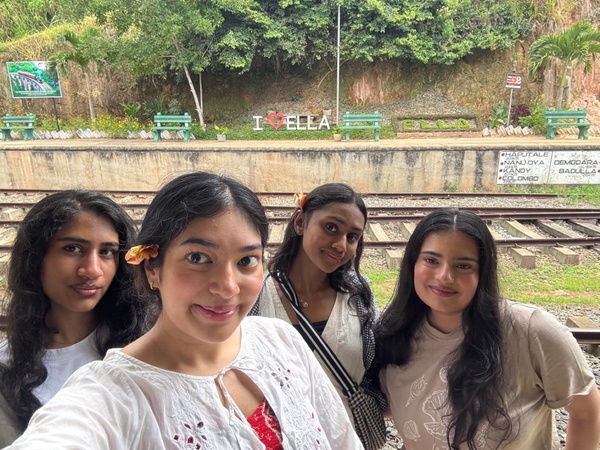
What would I say to someone considering a dental placement with Work the World? Do it!
It was definitely an incredible experience! I am really thankful to the Work the World team and the staff at the hospital I was placed at for collaborating to provide this placement opportunity.
It is really encouraging that from all points of contact, we’ve had such a positive experience and the utmost care, support and diligence in ensuring everything has run smoothly from the placements, activities and down time.

Start Your Journey
Want to go on your own once-in-a-lifetime adventure? Get started below: