- University of Lancaster 2026
- Village Healthcare weken, Nepal - Kathmandu
I was inspired to undertake the Village Healthcare Experience (Village Healthcare Experience) in a remote village because I wanted to deepen my understanding of how healthcare is delivered in rural, resource‑limited settings and to broaden my cultural competence beyond the hospital environment in Kathmandu.
As an adult nursing student preparing for autonomous practice, I felt it was important to experience the realities of community‑based care where access to equipment, diagnostics, and specialist support is limited, and where nurses rely heavily on clinical judgement, adaptability, and strong patient‑family relationships.
I was also motivated by a desire to learn how cultural beliefs, traditional healing practices, and community structures influence health behaviours and decision-making in rural Nepal.
Spending a week in at the VHE offered the opportunity to work closely with local healthcare workers, observe how they prioritise care with minimal resources, and understand the challenges faced by patients who travel long distances for treatment. This experience aligned with my goal of becoming a more globally aware, resilient, and person‑centred nurse, able to adapt safely and confidently in unfamiliar environments.
I expected the village to offer a very different healthcare environment compared to Kathmandu, with fewer resources, limited diagnostic equipment, and a stronger reliance on clinical judgement and community support. I anticipated that care would be more informal, with patients presenting later in their illness due to travel barriers, and that traditional beliefs and local healing practices would play a more visible role in how people understood and managed their health. I also expected that the pace of care would be less structured than in the hospital, with nurses adapting quickly to whatever walked through the door.
I went into the experience prepared for challenges such as language barriers, unpredictable clinical presentations, and the need to work more independently. At the same time, I expected the week to be deeply rewarding offering insight into rural health inequalities, strengthening my cultural competence, and helping me understand how community relationships shape patient care in Nepal
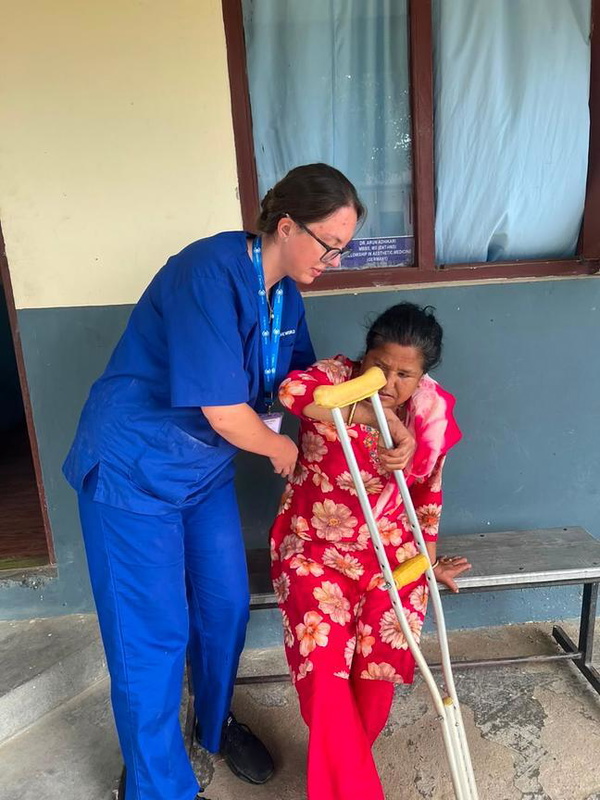
When I first arrived in the village, my immediate impression was how different the environment felt compared to the busy, high pressure atmosphere of Kathmandu. The village was quieter, slower, and far more community centred, and I noticed straight away how closely daily life and healthcare were intertwined. Walking into the village, I felt a mixture of anticipation and humility as the surroundings were simple, the community hospital was small with everything closed except the ED department due to staffing shortages, and it was clear that care here relied heavily on resourcefulness, teamwork, and strong relationships with local families
I remember feeling slightly out of my comfort zone at first, aware that I was stepping into a setting where equipment was limited, routines were flexible, and communication would depend heavily on non‑verbal cues and support from local staff. But alongside that initial uncertainty, I also felt a sense of excitement and purpose. The warmth of the community, the openness of the staff, and the calmness of the environment made me feel welcomed and grounded. It quickly became clear that this experience would challenge me, but also shape me offering a rare opportunity to learn how nursing is practised where resources are minimal but community strength is immense
Although you’re accompanied by a member of the Work the World team for the week, you live with one of their hand-picked host families. Living with my host family during the VHE was one of the most memorable parts of the Village Healthcare Experience. From the moment I arrived, they were genuinely warm, welcoming, and incredibly supportive. Their English was perfect, which made communication easy and helped me feel comfortable straight away.
The children were so smart, curious, and full of energy; they loved being around me, whether we were playing games, chatting, or sitting together while they did their homework. Sharing those small daily moments gave me a deeper insight into family life in rural Nepal and made me feel truly included in their home.
Living with the host family was very different from staying in the Work the World House. The house offered structure, comfort, and a familiar routine, with other students around and a team who organised meals and supported us day to day. In contrast, the village healthcare experience was quieter, more immersive, and centred around real community life. I adapted to simpler amenities, a slower pace, and a more personal connection with the people around me.
Evenings were spent talking with the family, helping with small tasks, or joining in with the children’s activities, which made the experience feel authentic and grounded. This week in the village gave me a deeper appreciation of Nepalese culture and strengthened my confidence in adapting to unfamiliar environments. The kindness of the family, the closeness of the community, and the joy of spending time with the children made the village week feel meaningful in a way that was completely different from my city based placement in Kathmandu. It was a truly lovely experience that enriched my understanding of rural life and the community context behind healthcare in a remote setting.
The afternoons were some of the most memorable parts of the Village Healthcare week, giving me the chance to explore the landscape, culture, and community beyond the clinic.
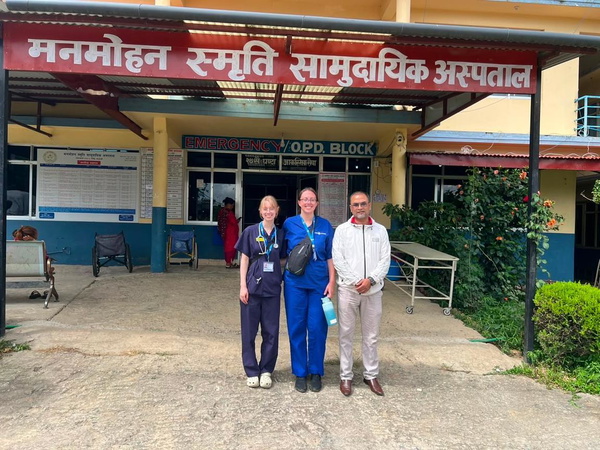
We spent many afternoons hiking through the hills surrounding the village, including the well known Pharping hike, which offered incredible views over the valley and a peaceful contrast to the busy hospital environment in Kathmandu.
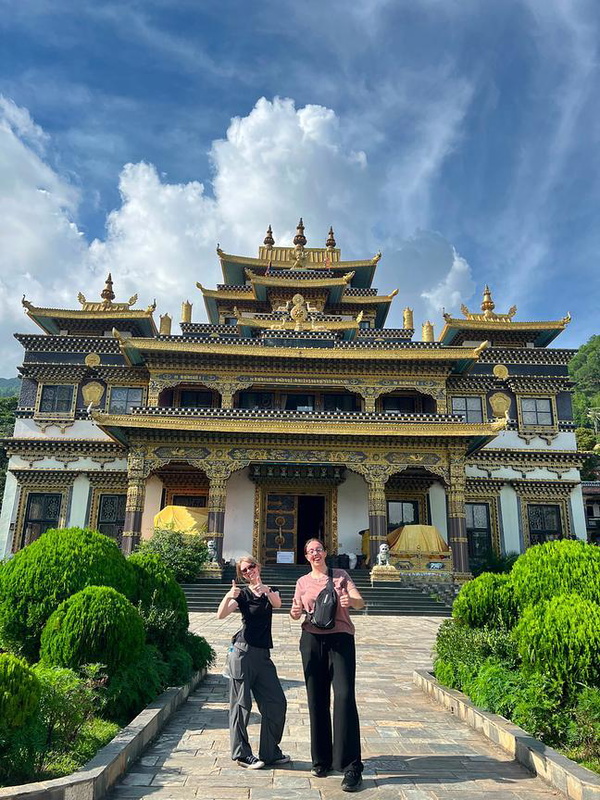
Crossing suspension bridges and walking through small rural settlements helped me appreciate how geography shapes daily life and access to healthcare in Nepal. We visited numerous temples and monasteries, each with its own history and significance. These visits gave me a deeper understanding of how spirituality and cultural beliefs influence health behaviours, decision making, and community identity. The calmness of the monasteries and the rituals we observed were very different from anything I had experienced in the UK.
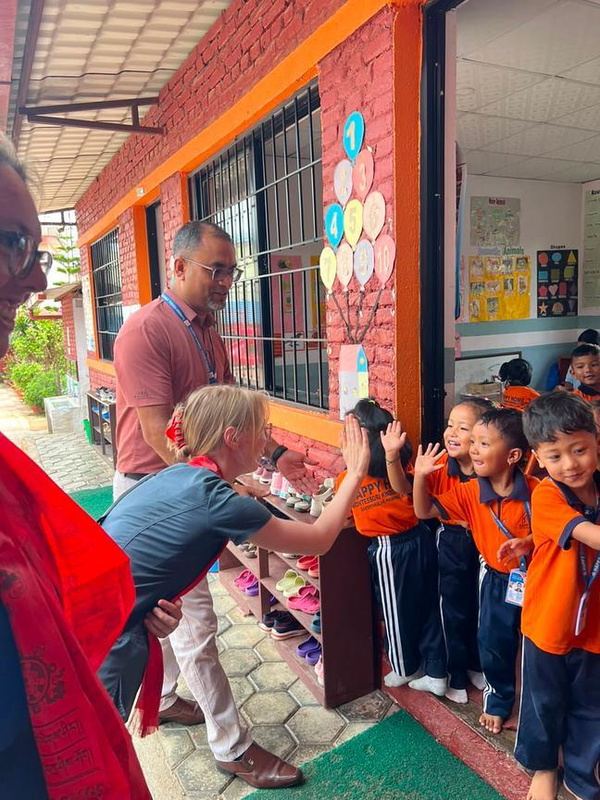
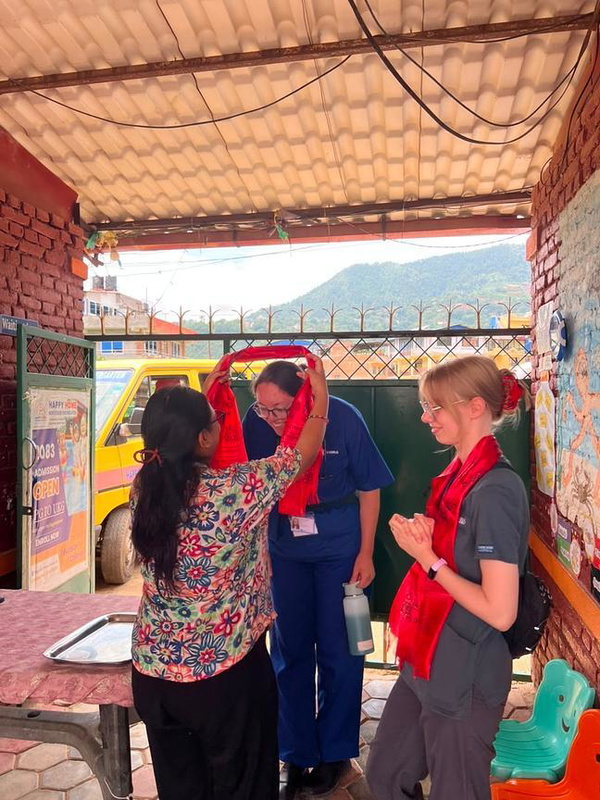
One of the highlights was visiting the local school, where the children were enthusiastic, confident, and eager to interact with us. Spending time with them offered a glimpse into rural education and the strong sense of community pride. Their energy and curiosity made the visit feel uplifting and meaningful. We also took part in a Newari cultural night, which was one of the most enjoyable experiences of the week. We dressed in traditional Newari attire, ate authentic Newari food, and danced to Newari songs with the family. This evening helped me appreciate the richness of Nepalese culture and the importance of tradition in rural life. It was a warm, joyful celebration that made me feel genuinely connected to the villagers. These cultural activities added depth to my placement, helping me understand the community context behind rural healthcare.
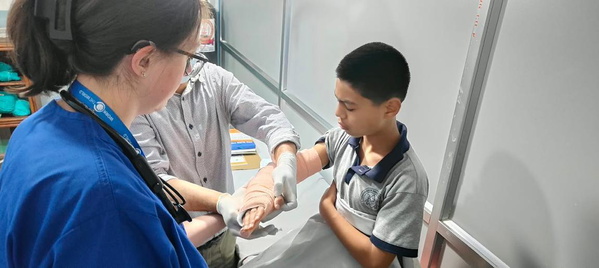
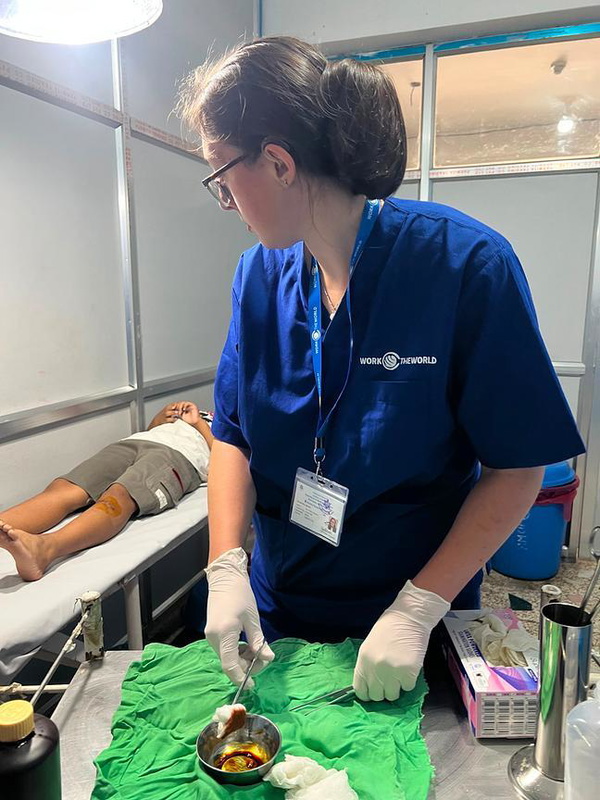
My experience in the village clinic highlighted how different healthcare delivery can be when resources, staffing, and infrastructure are limited. In the city‑based hospital, care was structured, protocol‑driven, and supported by a wide range of equipment, diagnostics, and specialist teams. Patients were triaged quickly, investigations were readily available, and clinical decisions were guided by established pathways. In contrast, the village clinic relied heavily on clinical judgement, observation, and practical problem‑solving.
With minimal equipment and limited medications, nurses and healthcare workers had to adapt to whatever presented, often managing conditions that would normally be escalated in a hospital setting.
Practices also differed significantly. In the hospital, roles were clearly defined, documentation was formal, and care followed predictable routines. At the village, care was more flexible and community‑centred. Nurses often took on broader responsibilities, from health education to wound care to supporting families who travelled long distances. Traditional beliefs and cultural practices influenced how patients understood illness, and family involvement was much stronger than in the city.
Many patients presented later in their illness due to travel barriers, meaning conditions were sometimes more advanced. Emotionally, these differences made me reflect on the privilege of working in a well‑resourced UK system. At first, I felt slightly out of my comfort zone, aware that I could not rely on the usual equipment or investigations. But I also felt inspired by the resilience, adaptability, and calm confidence of the village healthcare workers. Their ability to deliver safe, person‑centred care with limited resources strengthened my appreciation for global nursing and reinforced the importance of adaptability in unfamiliar environments.
My experience in the village was made significantly richer because of our World guide Samir. From the very first day, he brought an energy and enthusiasm that made every part of the village week feel special. He was funny, friendly, and incredibly easy to get along with, and his positive attitude set the tone for the whole group.
Whether we were in the community hospital or out exploring the village, Samir was always eager to help, support, and teach us. His knowledge of the area, the people, and the culture meant we were constantly learning, and he made every activity feel meaningful. In the clinic, Samir helped us understand how rural healthcare worked, guided us through community interactions, and supported us with communication when language barriers arose
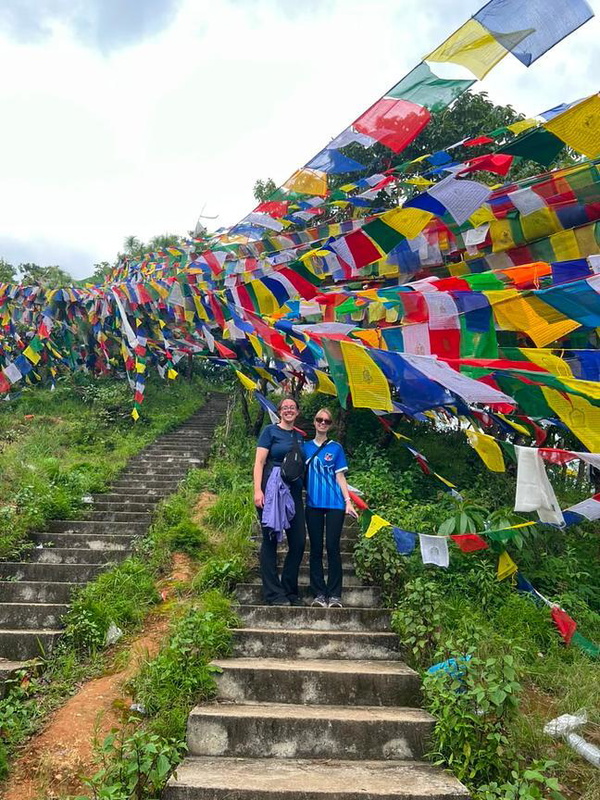
Outside of placement, he was just as dedicated. He took us on hikes, showed us hidden viewpoints, introduced us to local families, and explained the cultural significance of temples, monasteries, and community landmarks.
His enthusiasm made even simple walks feel like adventures. What made Samir stand out most was how genuinely he cared about our experience. He made sure we felt safe, included, and confident in everything we did.
His humour kept the group laughing, his energy kept us motivated, and his kindness made us feel at home in a completely unfamiliar environment. He didn’t just guide us, he connected with us.
The week became more than a placement; it became a personal, joyful experience because of him. By the end of the village week, I realised how much his presence had shaped my time in the village.
He made the experience unforgettable, and I genuinely miss him. His support, personality, and commitment turned a rural placement into a cultural, emotional, and professional highlight of my training.

Start Your Journey
Want to go on your own once-in-a-lifetime adventure? Get started below: