- KU Leuven 2026
- Geneeskunde, Nepal Kathmandu
I love travelling and discovering new parts of the world. I enjoy learning and I like a bit of adventure. I had never travelled to another country on my own before, so it was exciting to finally do that.
Even though you’re never truly alone here – other students are very welcoming – there’s also plenty of room to explore Kathmandu by yourself. It was definitely an experience outside my comfort zone, but I learned so much from it.
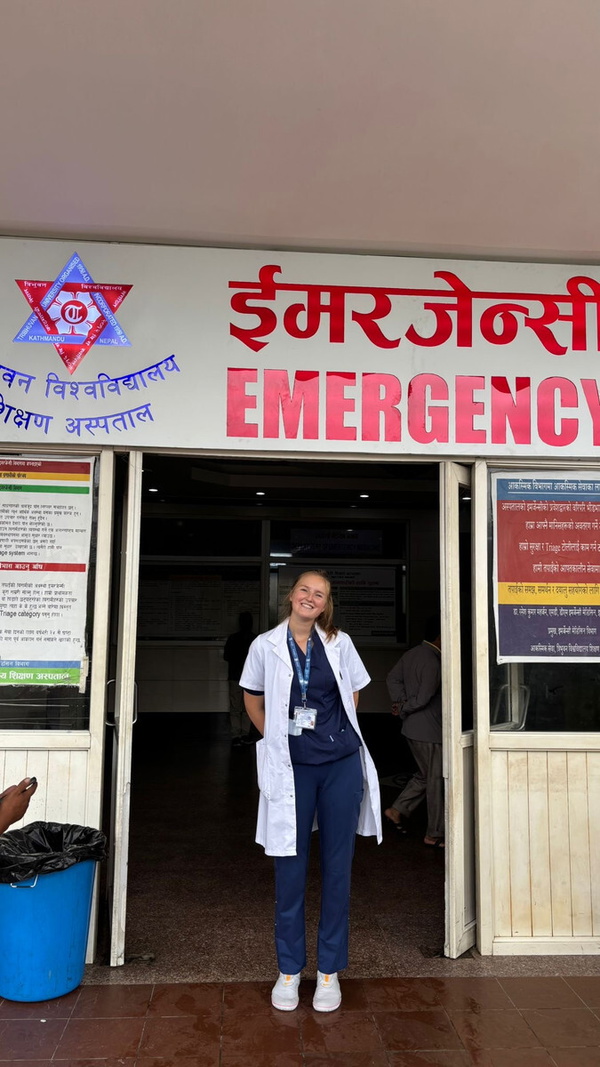
Before starting, I had already been told by other students – and also by Sean, the programme manager – that the first days could be a bit of a shock. He advised me to be proactive and keep an open mindset, which really helped.
When I arrived at the hospital, the staff welcomed us warmly. Several nurses introduced themselves straight away and told me I could ask anything. They took me along on ward rounds, explained procedures, and taught me how to take ABGs. The first few days were overwhelming with so many new impressions, but after a while you adapt and start to understand how things work here.
Most doctors spoke English, but with patients they mostly spoke Nepali. This encouraged me to take initiative, ask questions, and really engage with what was happening. I learned how to take ABGs, saw many conditions rarely encountered back home in Belgium, and gained a better understanding of how different healthcare systems approach similar problems.
A lot of my placement was focused on observation, which, as a second-year medical student, was actually a very valuable experience. It gave me the chance to learn by watching carefully, without the pressure of needing to perform complex tasks. I also learned a lot from other students who asked me if I understood, and explained things whenever I didn’t.
Some cases really stood out. For example, patients who were resistant to nearly all antibiotics except one. A patient who was unconscious and on ventilation – but since there was only one ventilator available for another patient, he had to be manually ventilated with SpO₂ levels sometimes as low as 50.
I also saw several hanging cases, which were very confronting, and more common than I expected. Another patient had a heart rate of 150 but blood pressure of 80/40, leading to dangerously low oxygen supply to her brain. She had CLD with massive fluid build-up in her abdomen. Treatment was slow to start, and sometimes even when medications like noradrenaline were given, it was through the wrong access point which reduced effectiveness. These cases showed me how resource limitations impact care in critical situations.
The most striking difference was in hygiene and organisation. For example, it was common for multiple patients to share a bed – sometimes one with HIV and another with tuberculosis. Needles were often reused if several attempts were needed.
Families were also much more involved in patient care – they would transport samples to the lab or bring food to the patient. Emergency procedures were less standardised, so critical patients didn’t always receive immediate treatment. On the other hand, in some situations things actually moved faster than in Belgium. It was eye opening.
Afternoons and evenings were flexible – sometimes we watched movies together or visited temples, and other times I explored Kathmandu on my own. The group trips to some temples were always great fun.
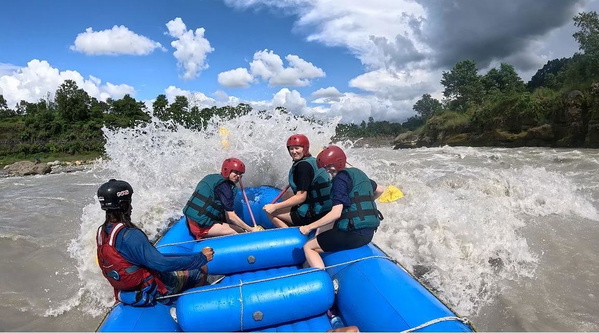
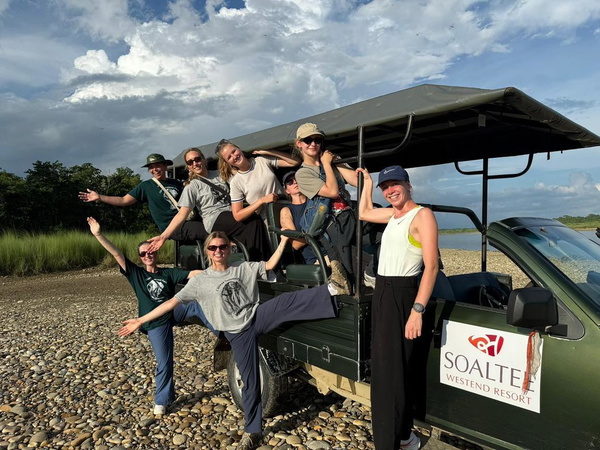
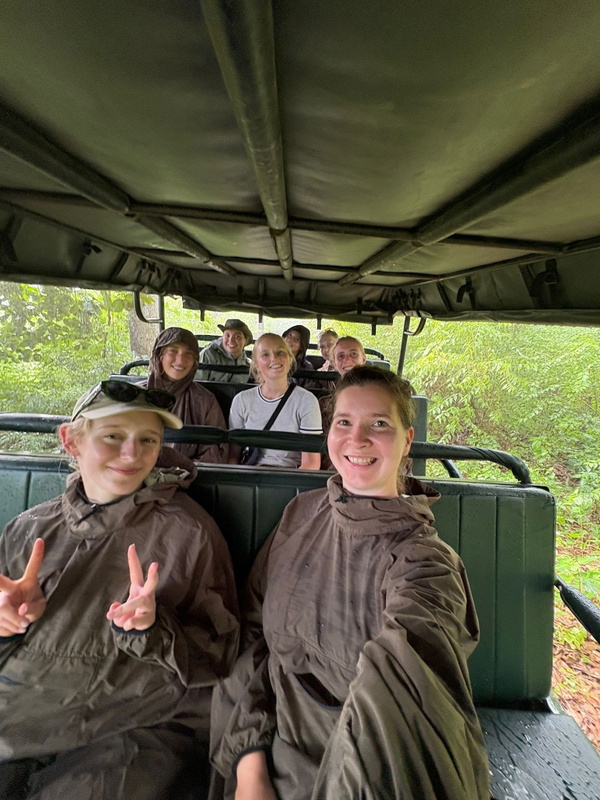
On weekends, we travelled further – I went to Pokhara the first weekend and Chitwan National Park. The Work the World team at the house helped us plan everything so we could really make the most of our time.
We also had a tradition where on Mondays we went out for ice cream with the new arrivals – a small but fun tradition that made everyone feel at home. After my placement, I stayed a little longer in Kathmandu, and the team even helped me organise the best guides for a hike.
This experience gave me so much personally and professionally. I saw the differences between healthcare systems, learned how to ask questions when I didn’t understand something, and gained knowledge that will help me in my future medical career. On a personal level, I learned how to connect with people even when we don’t speak the same language, how to travel and explore alone, and how to step far outside my comfort zone. Meeting other healthcare students from different countries was also very enriching – we shared our stories and learned from each other’s perspectives.
I would tell any healthcare student to -just go for it! Even as a second-year medical student, I learned an incredible amount.
Many students come here on their own and are open to meeting new people, which makes it very easy to connect.
On placement, other students were eager to share knowledge and explain conditions I had never even heard of. It was a truly amazing experience, and I’d recommend it to anyone – no matter what stage of their studies they’re in.
And one more thing: the food is absolutely delicious – worth the trip just for that!

Start Your Journey
Want to go on your own once-in-a-lifetime adventure? Get started below: